How an external view of a company is built from public data
Every organization has two images: the one it projects outward and the one the outside world builds about it from public data. The distance between both is frequently larger than the organization imagines.
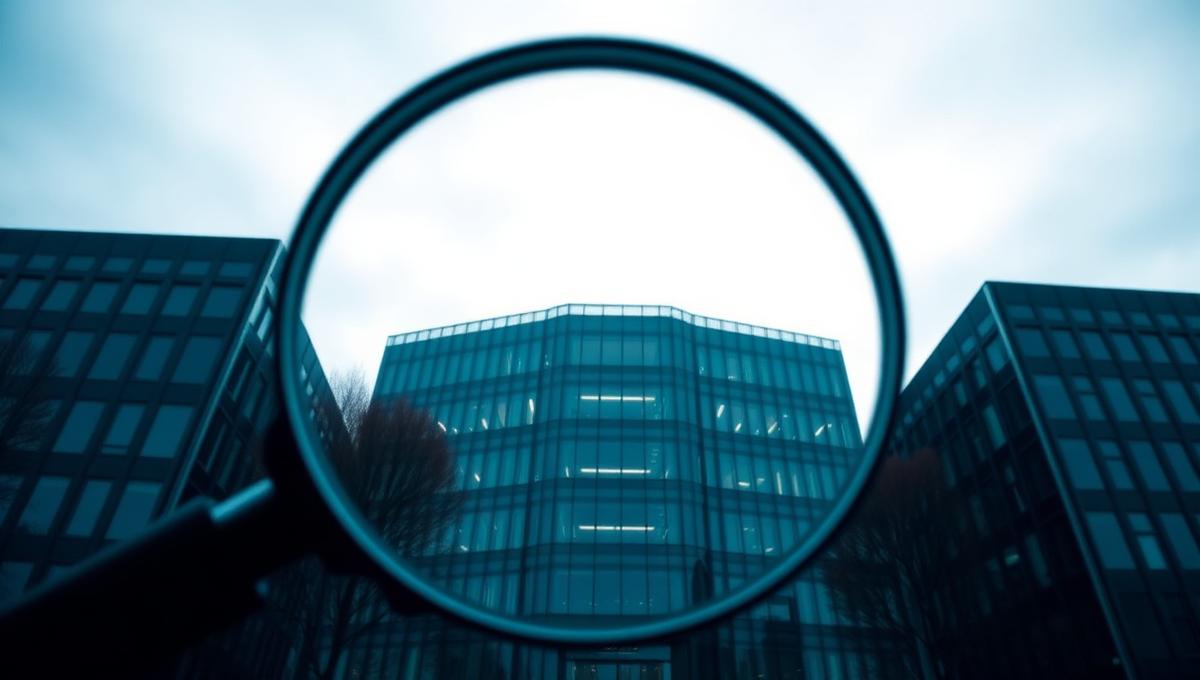
The image an organization has of itself rarely coincides with what an external observer can build from available public information. This divergence is not accidental. It's a structural consequence of two radically different perspectives.
For an intelligence analyst, competitor, or threat actor, the external view of a company is not built from what the company says about itself. It's built from what can be observed, verified, and correlated in open sources.
This article examines the process through which an external view of an organization is constructed and why companies should know the image others see.
Sources of external vision: where an observer looks
An external observer wanting to build an organization's profile doesn't depend on what the company voluntarily provides. They have access to a public source ecosystem that, correctly analyzed, reveals a surprisingly detailed operational portrait.
Commercial registries provide legal structure. Industrial property records reveal innovation lines. Judicial records expose litigation and conflicts.
Job portals reveal real operational needs. Professional networks show the human fabric. Media and sector publications provide the public narrative.
Each source provides a fragment. Intelligence consists of assembling those fragments into a coherent whole revealing what the organization really is.
The construction process: from fragments to operational profile
Building an external view is not a linear collection process. It's an iterative process of analysis, correlation, and synthesis transforming dispersed data into an integrated profile.
The analyst begins with an initial hypothesis based on most accessible information: public corporate identity. From there, they expand the search, correlate data from different sources, and build a map including organizational structure, operational capabilities, commercial relationships, detected vulnerabilities, and inferable strategic priorities.
What makes this process valuable is not the quantity of data collected but the connections established between them.
The gap between internal image and external view
The difference between what the organization believes the outside sees and what can actually be built with public data is almost always larger than expected.
Organizations tend to assume their external image is what they project through official channels. But the external view includes much more: what employees publish, what customers opine, what registries reveal, what metadata exposes.
This gap has direct strategic implications. If the organization doesn't know the external view, it can't manage it.
How Zero101OSINT helps
At Zero101OSINT, we build organizations' external view using exactly the same sources and methodologies an adversary, competitor, or regulator would use. The difference is we do it so the organization knows that view first.
Our approach enables:
- •Building the operational profile an external observer can elaborate with public data
- •Identifying the gap between official image and real external view
- •Detecting information the organization doesn't know is publicly available
- •Evaluating which external view elements pose risk and which are manageable
- •Providing recommendations to align projected image with real external view
We don't offer what the organization wants to hear about itself. We offer what others see when they look at it.
What you see from inside is never the same as what they see from outside
Organizations knowing the external view about them operate with a fundamental strategic advantage: the ability to manage their real image, not just the projected one.
Knowing the external view isn't a vanity exercise. It's an act of strategic intelligence. Because only what is known can be managed, and only what has been evaluated from the perspective of those who could use it against you can be protected.
Frequently asked questions
Are you making corporate decisions without all the information?
Request a confidential strategic evaluation. We analyze your specific situation and indicate whether we can help — and how.
Response within 24-48 hours. Confidentiality guaranteed.